2003_06_june_forum for saturday governor for act

Do we need a Governor or Administrator in the ACT? Monarchist Professor David Flint thinks so. He argues that governors-general, governors and administrators (Viceroys) are not mere rubber stamps, but provide an important constitutional function.

He thinks the Governor-General could double up as the ACT’s Administrator and do less ceremonial work around Australia so he or she could attend to important ACT constitutional duties.

Flint’s argument has got some difficulties.

To turn the monarchists’ slogan around, the ACT system is fixed, there is no need to break it.

If the role of Governor contains important constitutional duties, that must mean an exercise of power of one sort or another. In a democracy, those who exercise power should either be elected or should be accountable to those who are elected according to stated parameters.

The trouble with monarchy is that the monarch asserts power through what the monarch asserts to be divine right. True, in modern constitutional monarchies, the monarch (or the monarch’s representative in the form of a Governor-General) agrees not to assert day-to-day power but to give it to elected representatives. Nonetheless, some reserve “divine-right” power remains. It is uncodified. Convention determines when it arises, but there is nothing to say how it is to be exercised or provide redress if it is mishandled.
Continue reading “2003_06_june_forum for saturday governor for act”
2003_06_june_forum for saturday 26 jun medical negligence.do

Medical practitioners have a tougher time under the law than other defendants. But Governments should not cave in to all their demands just because they behave like blue-singletted yobs on the waterfront threatening to withdraw their labour unless they get it all their own way – as they are in the ACT at the moment.

The heat has been turned up in the ACT, because Jon Stanhope is the only state or territory leader to consider victims’ rights more carefully in medical negligence as well as road and workplace injury. All other jurisdictions have put in place legislation that severely cuts vicitms’ compensation rights. They have been led by that most knee-jerk of Premiers, Bob Carr in the NSW.

Stanhope’s proposals are more balanced. He is not going to put an arbitrary cap on damages. Good. He is not going to take away children’s rights. Good.

However, doctors do have two reasonable gripes about their liability which need attention: the long limitation time and the test for medical negligence.

The doctors argue that it is unfair that their liability can hover for more than 24 years after a medical event.

AMA president Dr Bill Glasson says doctors could be sitting in their rocking chairs with a catheter years down the track wondering if they might be sued.
Continue reading “2003_06_june_forum for saturday 26 jun medical negligence.do”

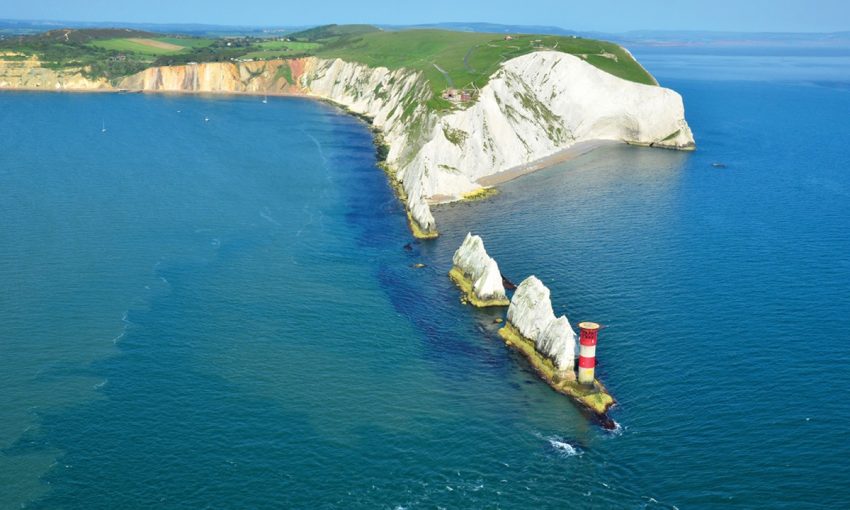
The Isle of Wight by bus

The Needles, Isle of Wight

Ventnor has one of the few sand beaches in England. In the shops on Pier Street and High Street you can see postcards of the beach filled with swimmers on a bright sunny day. Reality is different. On the day I was there it was about eight degrees at the end of a non-existent English spring.

Ventnor is on the southern tip of the Isle of Wight. Its streets are engraved into a steep hill overlooking the cold English Channel. The colour of the sea could only be found on a paint colour chart – – an opaque pastel blend of grey and green.

I spent one hour and eight minutes in Ventnor. How can I be so precise? Because it tells me so on Page 40 of one of the most remarkable documents in the history of British cryptography – – the Isle of Wight Bus Guide.

Before that bleak spring day, I used to think that the longest distance between any two points was an ACTION bus route in Canberra. Not so. ACTION’s guide and bus routes are a quick crossword compared to The Times’s cryptic that is the Isle of Wight Bus Guide. The guide is an astonishing 96 pages (each 10cm by 20 cm) for an island a little larger than the city of Canberra (50km by 30km) and a population of just 130,000.
Continue reading “The Isle of Wight by bus”

2003_05_may_rates rises

Suburb 2001 2003 2001-02 2002-03 2003-04 2004-05 2004-05 rates new owner new owner%
name AUV AUV rates rates rates rates new owner surcharge surcharge
Ainslie $147,700 $235,833 $1,306 $1,344 $1,387 $1,422 $1,996 $574 41%
O’Connor $155,400 $240,833 $1,367 $1,406 $1,451 $1,488 $2,035 $547 38%
Deakin $231,267 $340,100 $1,960 $2,017 $2,081 $2,133 $2,811 $678 33%
Kingston $159,967 $239,833 $1,402 $1,443 $1,489 $1,526 $2,027 $500 34%
Chifley $89,200 $152,933 $849 $874 $902 $924 $1,347 $423 47%
O’Malley $197,100 $278,267 $1,693 $1,742 $1,798 $1,843 $2,327 $485 27%
Stirling $84,267 $131,733 $810 $834 $861 $882 $1,182 $299 35%
Weston $78,867 $119,900 $768 $790 $816 $836 $1,089 $253 31%
Charnwood $39,367 $63,233 $459 $473 $488 $500 $646 $146 30%
Hawker $122,467 $176,767 $1,109 $1,141 $1,178 $1,207 $1,534 $326 28%
Spence $47,733 $74,533 $525 $540 $557 $571 $734 $163 29%
Fadden $82,067 $125,500 $793 $816 $842 $863 $1,133 $269 32%
Kambah $62,600 $91,967 $641 $660 $681 $698 $871 $173 25%
Ngunnawal $50,100 $78,333 $543 $559 $577 $591 $764 $173 30%
Palmerston

2003_05_may_moet and chandon

Not much above the ground is interesting in the French town Epernay.

Hoons in Renaults break the peace of the square. A woman waits for her poodle to poop. Very few old houses or churches – the legacy of war.

But underground is a different story. Since 1743 a vast system of tunnelled cellars has been continuously hewn out of the chalk. Now there are 28 kilometres of cellars storing 108 million bottles of Moet and Chandon champagne in various stages of production.

The undistinguished Epernay – 120 kilometres north-west of Paris – is the centre of the French champagne-producing area. The grapes come from kilometres around, but it is here that the vast portion champagne is produced by a score of producers, Moet and Chandon the best known.

The chalk rock has significant advantages. First, it is easy to cut through. Moet and Chandon began in 1743, well before mechanisation. Secondly, the chalk provides temperature and humidity control – absorbing water more readily than other rocks. In the cellars it is a constant 10 to 12 degrees.

In this environment, champagne – a cold-climate wine – can be stored.

Moet and Chandon (incidentally, impress your friends with the correct pronunciation; the Moet has a pronounced hard T) use three grape varieties: chardonnay, pinor noir and pinot meunier. Others, especially Australian wine-makers find no need for pinot meunier because their chardonnay gives enough roundness and bouquet. Incidentally, Australian producers are not allowed to use the word “champagne” on their labels under a Federal Court ruling that says the word describes wine from the Champagne district in France. Consumers of Australian product have to guess the contents of those strong bottles with wired-in corks.
Continue reading “2003_05_may_moet and chandon”

2003_05_may_medicare changes may 1

There is one sure way of destroying Medicare – prevent timely, reasonable changes that ensure Medicare fits changing circumstances.

Labor, the Democrats and the Greens seem to have a mindset that questions the motives of everything the Government does – and along with much of the media commentary, they assume everything the Government proposes must be bad.

Instead, they should look at the merits of what is being proposed. They should look at what is likely to happen if we continue on our merry way not adapting to circumstance. They should look at what is likely to happen if what is proposed is put in place and they should look at what is likely to happen if other proposals are put in place.

Since its inception 20 years ago, Medicare has never come near paying for itself. Last year it cost about $8 billion. The Medicare levy raised about $1.3 billion – just 16 per cent of the cost.

It would be more realistic to reduce income tax by 7 percentage points and increase the Medicare levy by 7 percentage points, so that the resulting 8.5 per cent levy would cover the $8 billion cost. People would then see on their tax returns the true cost of Medicare.

Of more importance, though, is setting out public – as distinct from political — aims for health spending, and getting the system to match these ends.
Continue reading “2003_05_may_medicare changes may 1”

2003_05_may_kansai airport for foum apr 17

It is harder to find a better example of all that is marvellous and all that is wrong with the Japanese economy than Kansai International Airport.

It is the main airport for Osaka and has become a overnight stop for many Australians using Japanese Airlines to fly Europe.

At once it is an engineering marvel and a catastrophe. At once it gains huge passenger numbers in the air-travel business but is running at an effective loss. It has swallowed up huge amounts of public money and caused massive debt – largely disguised in government-guaranteed bonds.

It was built on a made-made island 5km off the coast and some 50km out of the centre of Osaka. Instead of all the political buck-passing on Sydney’s aircraft noise and new airport, the Japanese Government just poured the money in to create an island in the ocean.

Work began in 1987. The island was finished by 1989 as the Nikkei index hit a record 40,000. The airport opened in 1994. The cost was a staggering $28 billion. Some came from the private sector, but the lion’s share came from local and national governments.
Continue reading “2003_05_may_kansai airport for foum apr 17”

2003_05_may_galloway for forum apr 24

There are advantages to having a Lower House of 650 or so members. The greater number means greater diversity and the more change of far-left and far-right odd-balls to turn up to cause great distraction and amusement.

One of these is George Galloway, the Labour Member for Glasgow Kelvin, or the Member for Bagdad Central as his detractors call him.

Galloway caused distraction and amusement this week after The Daily Telegraph revealed that its reporter in Bagdad had turned up what the reporter alleged were documents showing that Galloway had siphoned off about $900,000 a year from the UN-run Iraq oil for food program and the Iraqis had allowed this in order to buy influence. The Iraqis were obviously unaware that the influence of one maverick MP was perhaps not worth the money.

Galloway denies it and has issued a writ for libel against The Daily Telegraph. He says the documents are forgeries and it is all a plot by a pro-Zionist right-wing newspaper to discredit the left and the anti-war movement.
Continue reading “2003_05_may_galloway for forum apr 24”

2003_05_may_forum for saty 31 may abc digital

This week’s spat between the Government and the ABC over bias and funding is a side show to the real policy question – digital television.

Scraps over bias and funding happen regularly. But when the ABC’s Managing Director, Russell Balding, told a Senate Estimates Committee that the ABC would close two digital services, Fly TV and ABC Kids, because of a funding shortfall, we got an insight into what a monumental foul-up the Government’s digital television policy has been.

Sure, it was a smart bit of politics for Balding to go for the jugular to prove his point on funding. It is a common bureaucratic tactic by statutory authorities when squeezed by Government – cut things which will have a huge impact and make the voters squeal. Kids don’t vote; but their parents and grandparents do. And the young audience of Fly votes.

But the significant point was not the going for the jugular. Rather it was what a pitifully small amount of money the ABC would save by closing these services – just $7 million.
Continue reading “2003_05_may_forum for saty 31 may abc digital”

2003_05_may_forum for saturday mayl 9 budget

Access Economics’ David Chessel has a dry sense of humour, even for a dry economist.

We are indebted to him for reminding us this week of the quote from Louis XIV’s Finance Minister Jean Baptiste Colbert. Chessel likened ACT Treasurer Ted Quinlan to Colbert who said that the art of taxation was to pick the maximum amount of feathers from the goose for the least amount of hissing.

Chessel thought that Quinlan’s new revenue measures would create little hissing – the bushfire levy (temporary) and the extra water and gambling imposts on gambling and water (environmentally and socially responsible) and so gave Quinlan a mark of 77 per cent.

Maybe that is true in the short term. But in the longer term this week’s Budget has some contradictions and flaws. Most are not of Quinlan’s making. As he has plucked the goose’s feathers, he was probably pushed too much by the forces of Commonwealth-State (and Territory) financial relations and demands from his colleagues for goose down to feather their portfolio nests.

Trouble is, pluck the goose too much and it will fail to lay golden eggs.

It is a theme of Australian politics that Labor overspends on the right things and the Coalition controls spending with the wrong priorities.

But back to the ACT Budget.

Let’s look at the contradictions.

The socially responsible extra gambling taxes are supposed to discourage gambling. But gambling expenditure for the addicted is not discretionary. The extra tax will merely reduce the time in which the addicted gambler becomes penniless. On the other hand, the extra environmentally sensitive water charge will responsibly reduce water consumption. A portion of water consumption is discretionary and can be controlled (as we have seen in the past few months).
Continue reading “2003_05_may_forum for saturday mayl 9 budget”

Pin It on Pinterest

Password Reset
Please enter your e-mail address. You will receive a new password via e-mail.