Over the past week or so, most Australians would have received an email notice from their bank announcing “bigger”, “better”, or at best “changes to” their rewards program.
In fact, the banks are on a mission to claw back about $600 million of income about to be shorn from their profits because of a Reserve Bank decision to prohibit merchants from charging credit or debit cards fees on transactions from 1 October.
The Reserve expects merchants to absorb the cost, just like electricity, rent, rates and water, and charge all customers the same price for the same item.
In return the fees merchants pay to credit-card-sponsoring banks will be capped.
So the banks will take a hit unless they can claw back the reduced income in other ways – basically by reducing the benefits that come with the rewards programs and trying to tart up any changes as improvements when in fact, overall, customers will lose.
One of the biggest loss centres for customers will be the change by the Commonwealth Bank, Australia’s biggest bank with 17 million customers, to its Qantas arrangement. Hitherto every dollar spent on a card automatically converted to Qantas points. Qantas has at least 5.7 million customers. Under the new “better” scheme you will get fewer Qantas points for every dollar spent and you will have to pay an annual fee of $149 to be in the program.
This is on top of Qantas itself reducing the value of points by increasing the number you need for a flight or an upgrade.
The changes give rise to a few policy questions.
The Reserve’s card-fee change is a bit of a backpedal. Originally these fees were not allowed to be passed on to customers who use cards. It was similar to the decision that came with the imposition of the GST that consumers should be shown the price they will pay without any adds on. That has a lot of merit.
But then, in 2003 the Reserve saw other, competing, policy considerations and allowed the credit-card charges to be identified and passed on. It was in the interests of fairness and transparency. Why should cash customers, in effect, subsidise card users and, in effect, pay for their reward points?
Now in the interests of efficiency, not consumer transparency, the prohibition is to be restored. The Reserve wants to remove any disincentive to use cards rather than cash. It costs the Reserve about $50 million a year to supply enough banknotes for Australians. Cash also costs merchants because it has to be banked regularly and poses a security risk.
Cash also costs the Government in lost revenue through avoidance of the GST and income tax. The Australian Taxation Office estimates that at more than $16 billion a year. It says it gets about 50,000 tip-offs a year about cash being used to avoid tax.
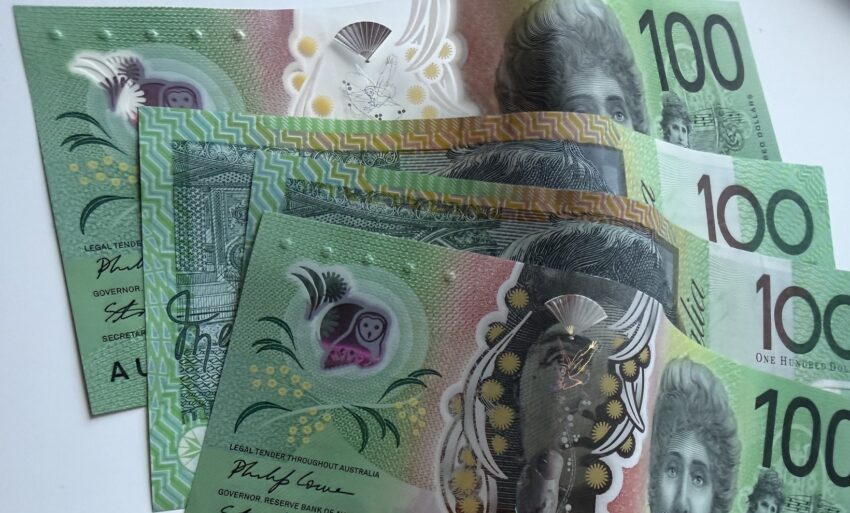
The $100 banknote makes up about a half of the value of Australian cash in circulation – 500 million of them – yet you hardly ever see them.
Whatever the Reserve’s ultimate aim is: mild short-term efficiency or long -term weaning the whole economy off cash, the surprising thing is how small the blow-back has been.
Usually, any change affecting the bottom line of big corporations or businesses generally causes widespread resistance and demands for the Government not to proceed. Perhaps, business lobbies think it is a waste of time trying to persuade the Reserve Bank to change its mind. After all, the Reserve Bank does not care about voters or whether voters get stirred up by artfully directed misinformation campaigns.
Or perhaps business does not want to upset the independence of the Reserve or realises that it has not got enough clout to sway the Reserve anyway.
On the airline side of things, there is a good argument that reward programs reduce competition. Reward plans lock customers in. Once a customer has built up points with an airline they are very unlikely to fly with another airline. The reduced competition means that airlines need not put much effort into reducing fares or improving service to attract more customers.
To the contrary, the cost-cutting through service reduction continues. The last flight I was on even reduced the cost of providing special vegetarian and gluten-free meals, by serving everyone in economy a vegetarian, gluten-free pie in a box. Cutlery and crockery disappeared long ago.
All the evidence shows that cost savings are going to upper management and shareholders, not the mass of employees (or what’s left of them after contracting out) or consumers.
Back to the banks.
In 1974, Australia and New Zealand’s major banks introduced the Bankcard. Within a decade it had saturated the market with 5 million cards issued. It was all downhill from there because it only worked in Australia and New Zealand. By 2006 it was dead – another Australian asset handed to overseas interests.
The major credit card companies – none of them Australian – cream off more than $6 billion a year from Australian credit-card customers. Nearly all the money goes to US shareholders.
The Australian banks cream off a further $1.7 billion in transaction fees and a lot more in interest. That suits the international card companies because the local banks bear the risk on defaults.
And defaults and late payments with exorbitant interest rates are increasing. Australians owe about $19 billion on credit cards and more than a third of cardholders do not pay the full amount in any given month.
The rich get richer, the poor get poorer, and bank profits grow. The latest annual Commonwealth Bank profit was $10.9 billion. That compares to the paltry $8 billion raised from its sale in the 1990s. That profit would have put a fair hole in our $31.5 billion annual deficit. It makes you wonder why the bank was ever privatised.
The whole credit-card and rewards system also make you wonder why the Reserve Bank did not go the full distance and either set credit-card interest rates at a more reasonable level or, indeed, issue its own credit cards.
This article first appeared in The Canberra Times and oher Australian media on 25 August 2026.
Crispin Hull