TWO under-reported events earlier this month show how serious China is to become the world’s dominant economic, and possibly, military power. They come as President Donald Trump is making a hash of US trade and security matters.
Most people have been concentrating on China’s moves the South China Sea and the Pacific, but developments to the west should raise similar concerns.
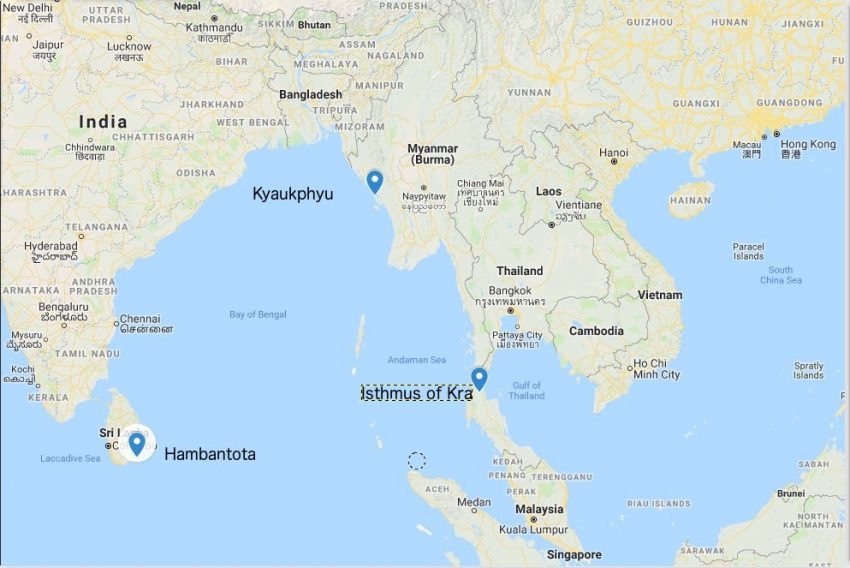
China has signed a $A9 billion agreement to construct a deep-water port at Kyaukphyu, a strategic city in Myanmar that lies on the Bay of Bengal coast.
In a complementary move China is dusting off proposals to build a 120-kilometre canal across the Isthmus of Kra in southern Thailand.
Together with the Chinese-built and now Chinese-owned port at Hambantota in Sri Lanka and the Chinese-built port at Gwadar close to the mouth of the Persian Gulf in Pakistan it will make for a Chinese-controlled string of pearls trading route from China to the Middle East and Europe.
The canal will mean ships could go from China to the Indian Ocean without passing Singapore or going through the Straits of Malacca.
Though the canal will be in Thai territory, the Chinese financing will ensure Chinese control, in the same way that the British and French controlled the Suez Canal for decades and the US controlled the Panama Canal for decades.
How should the US respond?
The US is confronting China over unfair trade and freedom of navigation in the South China Sea, but not getting very far. Australia and other nations, too, have criticised China for its militarisation of the South China Sea, but again they have not got very far.
China just shrugs and keeps on going.
It would be foolish to think that Trump can do to China what President Ronald Reagan claimed to do to the Soviet Union: confront and out-spend militarily until it collapses.
The present US-China confrontation is nothing like the US-Soviet confrontation during the Cold War.
The idea that a Soviet-led communist empire would replace the US as the world’s dominant economic and military power was never a serious proposition except in the minds of a few paranoid US military figures.
The Soviet Union was never a huge trading nation, unlike China, so it had no real sway over the West.
During the Cold War security issues could be separated from economic and trade issues. There was simply so little trade with the communist bloc that it could be ignored. Besides, the Soviet system would have collapsed even without Reagan’s pressure.
China, on the other hand, has emerged as an economic powerhouse and the West is now dependent on it, not just for economic prosperity and economic growth, but utterly dependent on Chinese production and export of vital goods.
For example, the US no longer produces penicillin and, indeed, a raft of generic medicines upon which many American lives depend. They are made in China and to a lesser extent India.
In this environment, Trump’s tariff actions and threats are extremely dangerous and economically destructive. The US is a capitalist democracy under the rule of law. China is not.
Legally, Trump could only impose his steel tariff without congressional approval if national security was an issue. There are legal constraints on restricting US exports to China. Private companies can export against presidential wishes.
China, on the other hand, could without notice or legal nicety, cut off the supply of vital drugs to the US. It could impose tariffs on US imports in a politically motivated way to hurt producers of products in places that voted heavily for Trump – such as soya beans.
Trump – accepting bad advice on national security not taking good advice on trade – has done exactly the opposite of what is needed.
As revealed in Bob Wooward’s “Fear. Trump in the White House”, Trump ignored advice that he should aggressively take on China under the World Trade Organisation for theft of intellectual property. Most of the developed world would have joined in. It would have bolstered the rules-based order. But Trump worried about his illusory good relationship with President Xi.
He ignored advice to stay in the Trans Pacific Partnership and the Paris Climate Accord. He ignored advice not to impose the steel tariff. The advice was that it would harm US industry that consumed steel especially cars, boats and pipelines while not creating any steel jobs.
On the other hand, some of his instincts on national security were dead right, but he allowed the military-industrial complex, the Washington elites and swamp to deter him from acting on them.
During the campaign publicly and afterwards privately, Trump railed against Europe and South Korea for not pulling their weight on security and he said the US should just pull out of Afghanistan, Iraq, Syria and the Middle East generally and should never have gone there in the first place. Quite right.
But his advisers said that if the US withdrew from Afghanistan, it would enable terrorists in Afghanistan to launch an attack on US soil for which he would be blamed. Trump capitulated, agreeing to stay the course and increase troop numbers in an unwinnable 16-year-old war.
He should have said a withdrawal would make terrorist attacks less likely, not more likely. Similarly, withdrawal from South Korea would make an attack by North Korea, less likely not more likely.
However, these withdrawals would have had to be accompanied by a winding back of arms sales to Israel and Saudi Arabia if the US really wanted to take itself off the list of Islamic extremists’ terror targets. Unfortunately, Trump would never do that.
Even so, a better response to China is needed. The US should stop being policeman to the world and extricate itself from costly shooting wars costly unilaterally declared trade wars. The peace dividend could then be used to do what China is doing: helping developing countries develop transport infrastructure to improve trade.
This is not a new idea. After all, a century ago a US government commission headed by US Army engineers built the Panama Canal. Why shouldn’t the US join Thailand and China in building the Kra canal? That sort of cooperation would help bring China into the international rules-based order and be much more constructive than hissy fits on trade and shoot-from-the hip policies in the Muslim world.
CRISPIN HULL
This article first appeared in The Canberra Times and other Fairfax Media on 24 November 2018.
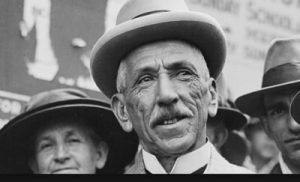 When US President Woodrow Wilson tried to belittle Australian Prime Minister Billy Hughes at the 1919 Versailles peace conference by asking who he represented, Hughes replied: “I speak for 60,000 Australian war dead.”
 THE past couple of decades are not unique in Australian political history: the despising of the loathsome politicians and the sudden and late coming around of those loathsome politicians to abandon the positions of their financial backers and appease the majority of thoughtful people in the face of impending electoral defeat.
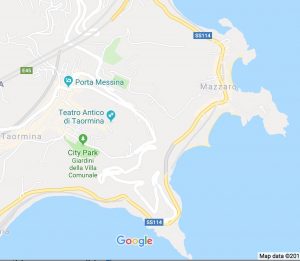 THE Australian-accented woman’s voice on Google Maps can sure murder the pronunciation of Italian street names. “In 800 metres turn left at VIE-AH LEPARD-DIE then turn right into VIE-HA GUY-SEP LEDG-EO,” and so on.
 Going by the trend in Wentworth it seems that the big stich-up against minor parties and independents in the Senate by the Coalition and Labor in 2016 is not going to work.
 “This is just Government 101: carefully consider the issues in front of you and make the best possible judgments about the way forward,” Prime Minister Scott Morrison said about the reason for the Government withholding the Ruddock report on religious freedom. It presumes basic university-level learning. Alas, this Government’s behaviour belongs in primary school.
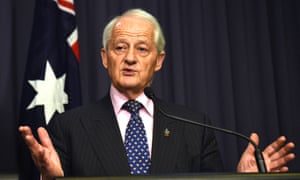 IT SEEMS that the Government is going to hang on to Philip Ruddock’s report on religious freedom until after this month’s by-election and then, according to Prime Minister Scott Morrison, take some legislative action on it.
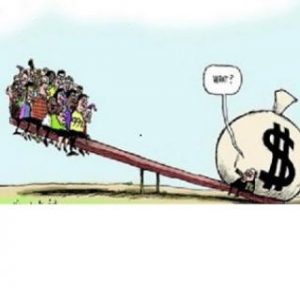 IT IS difficult to work out the degree of Australia’s growing inequality in income and wealth, simply because a lot of high-wealth, high-income people disguise it. But in the past week or so a couple of publications show inequality is higher than officially recognised.